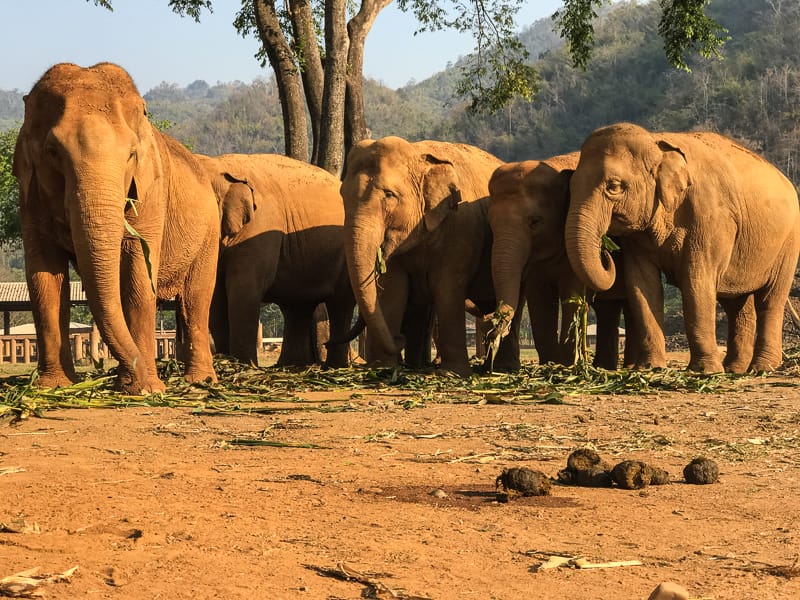
Want to Ride an Elephant? How to Choose an Ethical Alternative and Why.
What’s on your bucket list? See the northern lights in Iceland? Trek to Machu Picchu? Swim with dolphins in Mexico? Ride an elephant in Thailand?
Everyone has a list. Whether it’s stored in the back of your brain or pinned on the fridge with ticks against it.
But do we take the time to check if our dreams are actually ethical? Most people who want to swim with dolphins or ride an elephant want to do so because they love animals. But many don’t realise that their once-in-a-lifetime experience is anything but that for the elephant or the dolphin.
I’ve been there. I didn’t know better. I do now. Knowledge is a powerful thing as they say. This article is to give you knowledge and power to make an ethical choice when picking an elephant experience for your bucket list.
So exactly what does ethical mean?
Ethical tourism, also called responsible tourism, mean thinking about the consequences of your actions as a tourist on the environment, local people and local economy. Not only thinking about it, but acting on it. We have a choice on how, when, and where we spend our tourist dollars.
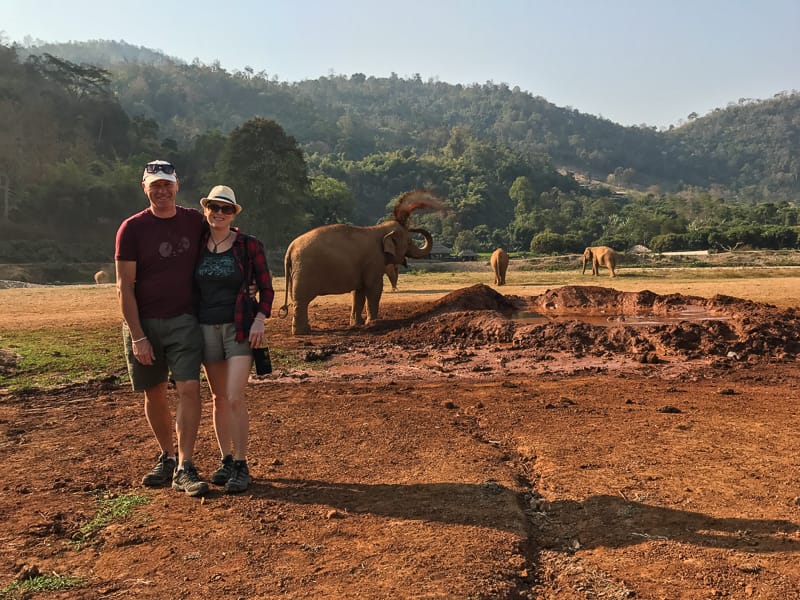
When it comes to elephants, it means choosing an experience which allows the elephant to exhibit its natural behaviour in a safe and non-threatening environment. It means the elephant has access to food, water, shade and dust or mud.
Why does it matter?
Many Trip Advisor reviewers rave about their elephant experience. How the elephants ‘seemed’ happy. But the well hidden secret of elephant tourism, and that includes circuses, zoos, trekking camps, shows and street begging, is ‘the crush’. Have you ever wondered how one small man can make an enormous elephant paint a picture, stand on its head or allow people to ride on its back?
The answer is something called the crush, or Phajaan in Thailand. Other countries have different names but the process is the same. The vast majority of elephants you see in elephant tourism have experienced it. Stolen from its mother in the wild, the baby elephant aged three to six years old is confined in a small wooden frame no bigger than its body. Where it will be shackled by chains or ropes. Where it will be beaten with a bamboo stick with nails in it. Where it will be bludgeoned with a bull hook (imagine an ice pick with a wooden handle). Where it will be deprived of food and water. For at least a week. Until its spirit literally breaks. Until it no longer recognises its mother. And its mother doesn’t recognise it.
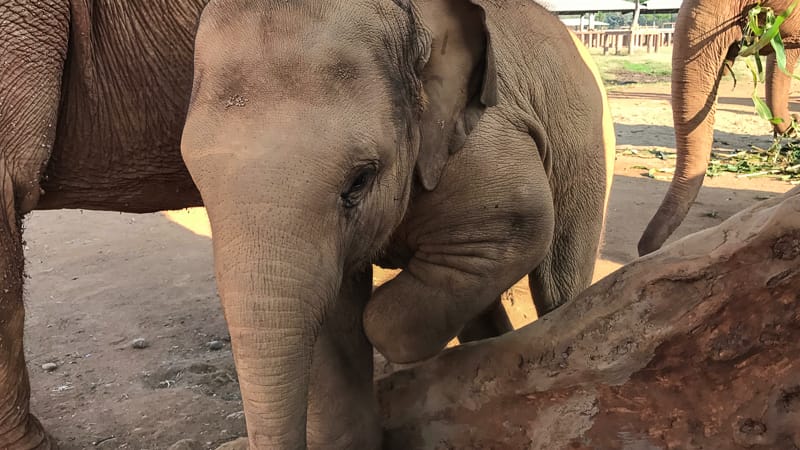
The baby elephant is now ready for training. This again can be brutal, particularly when training an elephant to do something very unnatural, such as painting or circus tricks.
Heartbreaking isn’t it? I have tears in my eyes just writing this. I was sobbing when I saw a YouTube video of a crush. It’s not something you would imagine. But it happens to almost every single elephant you see at a circus, in a zoo, in a trekking camp or at an elephant show.
But don’t despair, you can still have an amazing once-in-a-lifetime elephant experience which is ethical for the elephant too.
How to choose an ethical elephant experience
The Truly Wild Experience
The most ethical of all experiences is to watch wild elephants in their natural habitat. Elephants who have never experienced the crush. You will feel a vibrant energy from them. The ‘wildness’ I guess. There is nothing quite like it when a giant bull elephant strides straight towards your jeep as you beat an adrenal-charged retreat!
When choosing this kind of experience:
-
Look for a guided jeep tour where you can watch from a safe distance
-
Avoid ‘safaris’ that offer riding
-
Research carefully ‘elephant orphanages’ as babies are often poached from the wild
The Next Best Thing
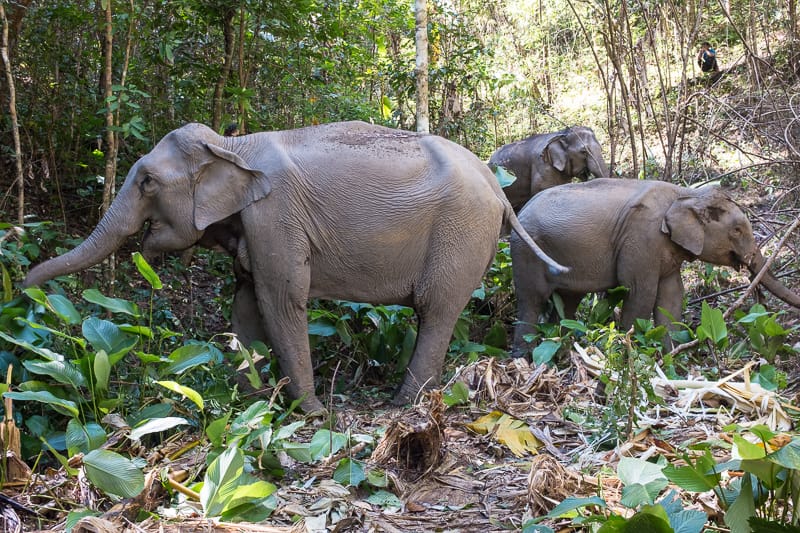
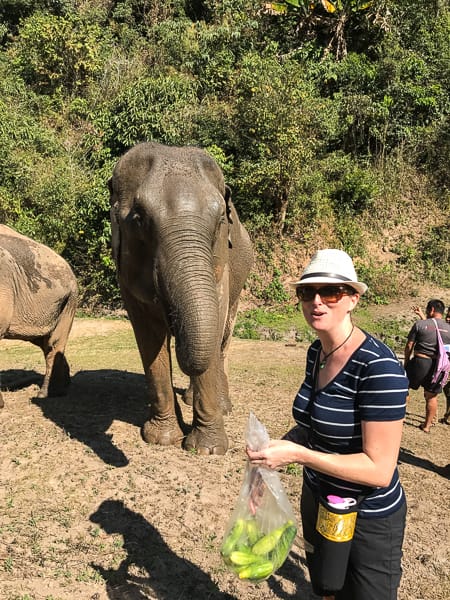
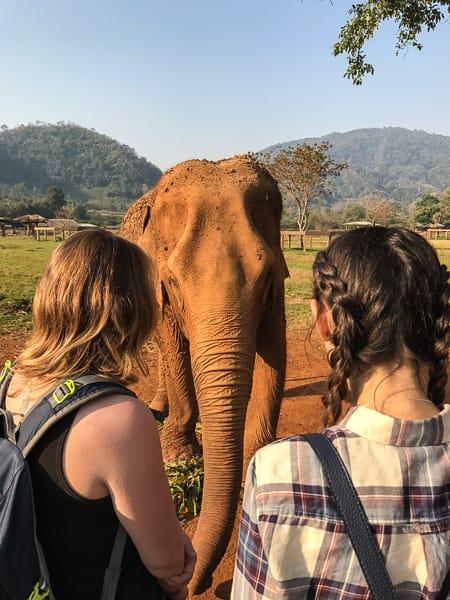
Sanctuaries which rescue abused elephants from tourism or illegal logging are the next best option. Genuine sanctuaries will allow elephants to live out their days in as close to a wild environment as they can. Elephant Nature Park (ENP) in Thailand and its partner programmes across Thailand, Cambodia, and Myanmar excel at this. Here tourists can feed and bathe elephants. There are no bull hooks and training is done with positive reinforcement.
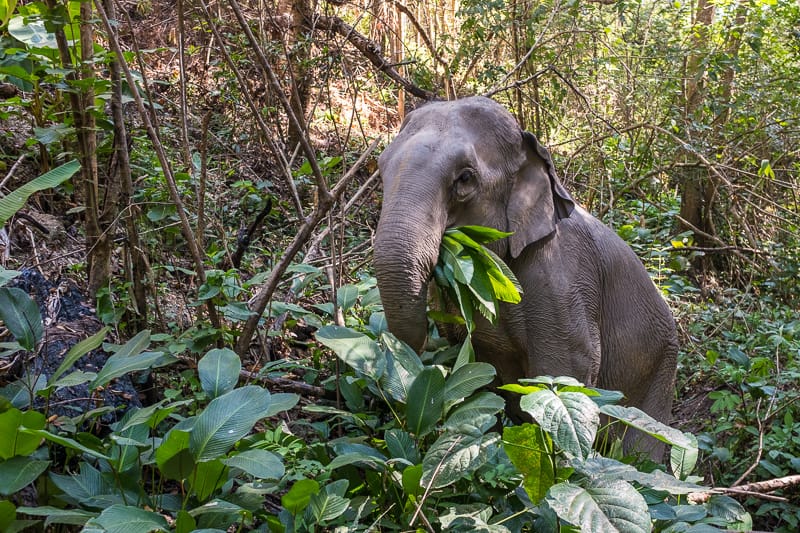
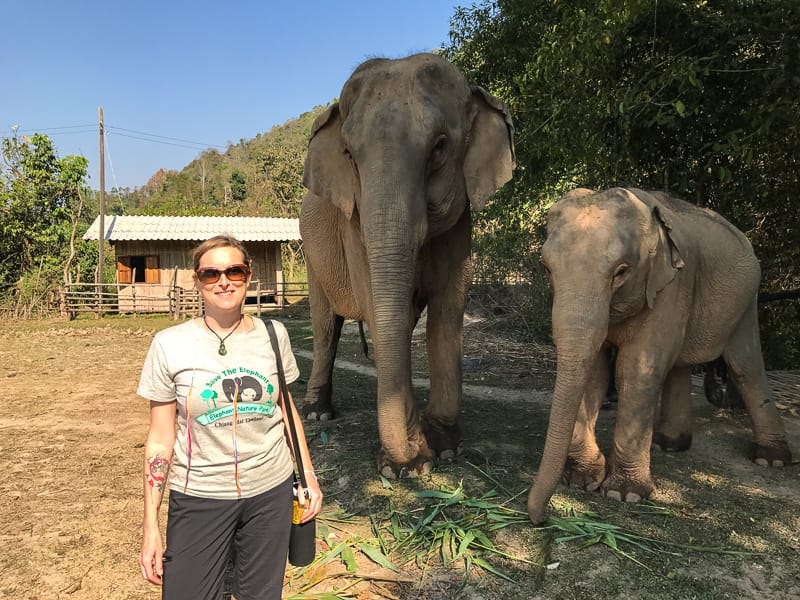
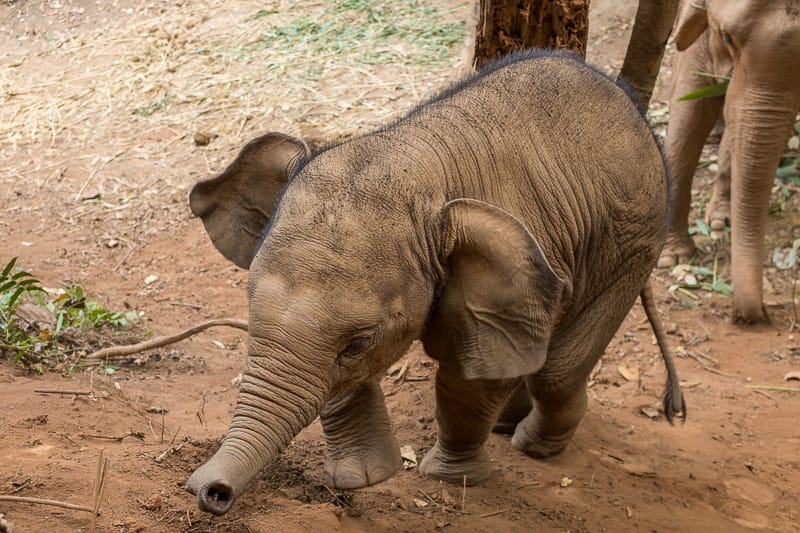
Depending on how adventurous you are, you can also volunteer for a week. We have volunteered at both ENP and Journey to Freedom. It’s a great way to give your love (and tourist dollars) to rescued elephants. You also get to immerse yourself in elephant life, learning about the herd, and watching intricate behaviours. The time six-month-old Kili tried to sit on my lap as she learned to climb a dusty slope still brings a broad grin to my face even now. More here.
When choosing this kind of experience:
-
Look for camps that offer no riding, no shows, no performances
-
Avoid any camps that offer ‘mahout training’ as this often includes bare-necked riding
-
Research carefully the use of bull hooks as this isn’t always clear. If in doubt ask directly how the camp trains its elephants
Will it really be as good as riding an elephant?
Research shows that an elephant’s spine is not designed to carry a heavy load. It is not structured in the same way as a horse for example. The ‘howdahs’ or saddles fully-laden with tourists can weight between 300-500 kg. Also, sat up there how are you sharing a beautiful moment with such a majestic creature?
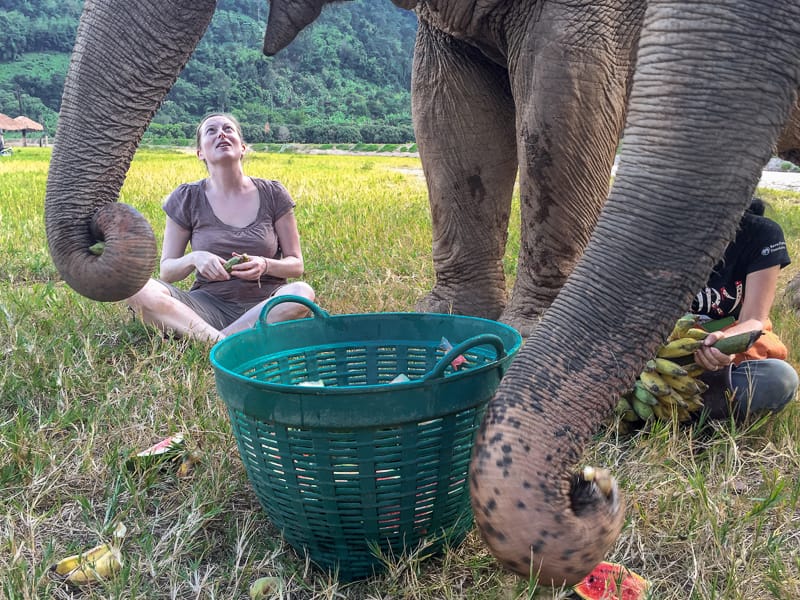
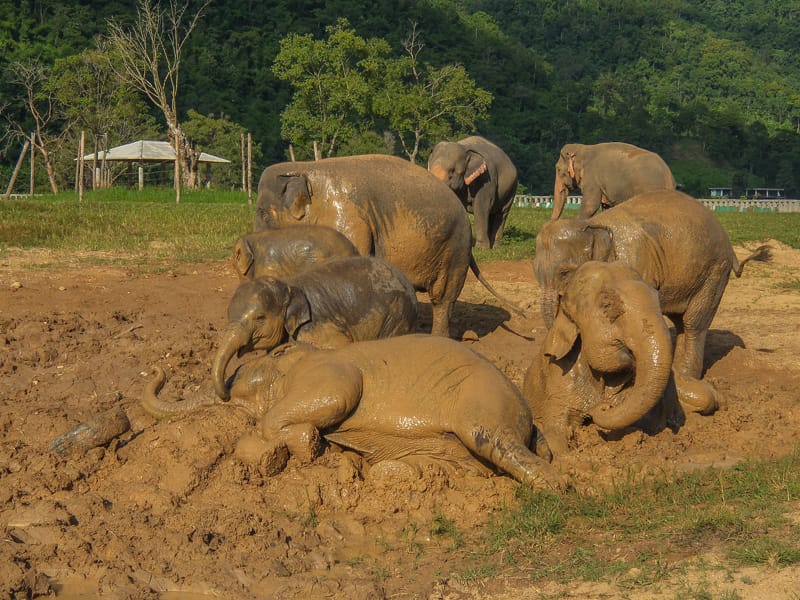
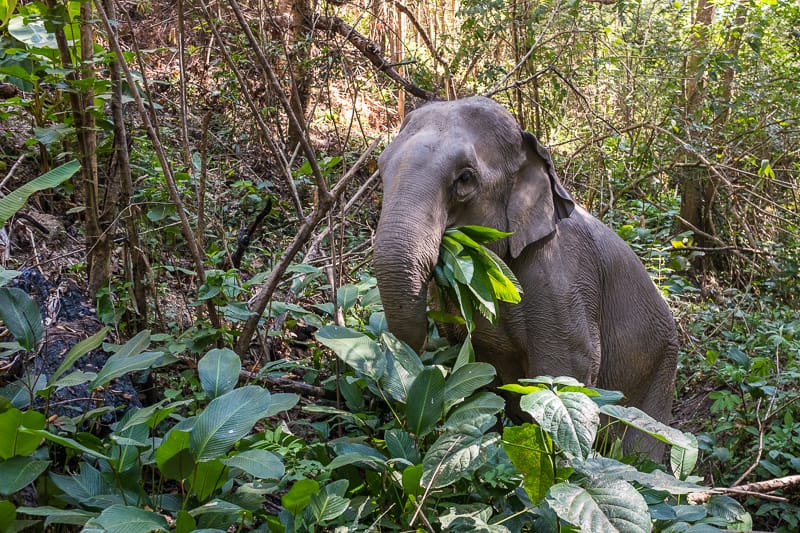
Instead you could be sharing moments like these:

A note on other elephant experiences
Street begging, elephant painting, any kind of shows – please avoid them. I know it is difficult to walk away as you want to help the elephants but the best way to help them is to not hand over money or food. This perpetuates the elephant’s misery and encourages more elephants to be used in this way.
Final note
Don’t be too hard on yourself. We have all been there. We don’t know what we don’t know. But you know about elephants in tourism now. Time to update that bucket list? How about changing ‘Ride an elephant’ to ‘Feed an elephant bananas by hand’ or ‘Hike into the jungle and watch an elephant devour a banana tree’?
The more we choose ethical experiences, the more it encourages non-ethical camps to change.
Enjoy your elephant experience. If it is anything like mine, it will be more than a once-in-a-lifetime thing. As elephant time becomes quite addictive!
Useful links to further your elephant education
http://www.elephantexperts.org/index.html
https://www.thailandelephants.org
http://www.bornfree.org.uk/animals/asian-elephants/
https://landlopers.com/2014/08/18/elephant-rides (An interview with Diana Edelman, from the Save Elephant Foundation).


Wonderful article!! MUCH appreciated!!! – I did find a sanctuary in South Africa’s Kruger Natl. Park that had rescued elephants whose family had been culled and to offset the enormous expense (a grown elephant apparently eats p to 2000kg per day!!) they had tourist interactions similar to what you are describing. They also offered the riding, but only a short 10 min. loop. Still not ideal, but at the same time better than killing the animals, because noone wants to take them. Anyway, GREAT article!! – love the pictures – is that the famous elephant place near Chiang Mai? I almost went, but they were booked up when I was there.
You might want to think twice about nature park. No where can you find “bad reviews” etc etc and it’s voted “number one” but there’s a lot behind closed doors, and unfortunately nature park isn’t as angelic as they appear. Also, teaching an animal to paint in a non-inhuman way is actually very good for the animal! Lots of brain enrichment and stimulation, especially for elephants and giraffes since those two fellas do not sleep much at all in 24hours. Take care xo
Hi Meli, thank you for your comment. However, we are not sure where you are coming from. Teaching an elephant to paint is the result of terrible abuse that the elephant has to go through in order to be trained. The paintings are not done for the benefit of the elephant but to create a living for the owner. Unfortunately, tourists buying the paintings do not see the pain and suffering that comes before another elephant masterpiece.
As to ENP, we not only speak from our own experience but also the experiences of many like-minded travellers. There is always the possibility of fake reviews, especially when that reviewer has not reviewed anything before. Overwhelmingly the reviews of ENP are from people who have volunteered at one of the many projects and have a first-hand experience of the fantastic work that the organisation provide.
I think this article is written with good intentions, but to say that virtually every elephant in a zoo has been through what you’ve described is just demonstrably false. Accredited zoos in the US for instance do absolutely nothing like this. And I’m aware of several America zoos that have taught elephants to paint as an enrichment activity using only positive reinforcement training. As I said, I’m quite sure you have only the best of intentions, but you’re painting with an awfully broad brush here.
Hi Meli, thank you for your comment. However, we are not sure where you are coming from. Teaching an elephant to paint is the result of terrible abuse that the elephant has to go through in order to be trained. The paintings are not done for the benefit of the elephant but to create a living for the owner. Unfortunately, tourists buying the paintings do not see the pain and suffering that comes before another elephant masterpiece.
As to ENP, we not only speak from our own experience but also the experiences of many like-minded travellers. There is always the possibility of fake reviews, especially when that reviewer has not reviewed anything before. Overwhelmingly the reviews of ENP are from people who have volunteered at one of the many projects and have a first-hand experience of the fantastic work that the organisation provide.
Wonderful article. Thank you. I am going to volunteer at ENP for two weeks in November.
Thanks so much Christine for taking the time to read our post. You will have a blast at ENP. We have just booked for my youngest daughter to go in December. Thanks Steve
Hi Tess, huge thanks for reading the post. Absolutely agree, with all animals admiring from a distance is the way to go.
At ENP, only a small percentage of the elephants come up to the feeding platform daily. Most of the elephants graze on the vast amount of space that is ENP and a safe distance away from visitors. The elephants that do go up to the platform are not surrounded and can choose to step away once they have had enough food.
All the adult elephants at ENP have been rescued. They will, unfortunately, have gone through the crush as a youngster. Hence being comfortable around humans. Each elephant also has a mahout that stays with the elephant during the daytime to make the elephant remains safe.
I agree with you tremendously about zero tolerance to riding and any activity that involves these animals. I wonder how different constantly being surrounded by tourists in hoards wanting to touch and feed at close proximity is any different to riding? They should be admired from a distance. How did the elephants at ENP come to be so accepting and comfortable and well behaved around people and remain to be?
Hi Tess, huge thanks for reading the post. Absolutely agree, with all animals admiring from a distance is the way to go.
At ENP, only a small percentage of the elephants come up to the feeding platform daily. Most of the elephants graze on the vast amount of space that is ENP and a safe distance away from visitors. The elephants that do go up to the platform are not surrounded and can choose to step away once they have had enough food.
All the adult elephants at ENP have been rescued. They will, unfortunately, have gone through the crush as a youngster. Hence being comfortable around humans. Each elephant also has a mahout that stays with the elephant during the daytime to make the elephant remains safe.
I am currently getting information regarding possibilities to visit elephants, the places mentioned look stunning to me, but I have no details of specific places. I certainly would like to volunteer for some days, but where? I live in Spain, plan to travel sometime next year, but have no idea where, can you get me some more detailed ideas?
Thanks so much Christine for taking the time to read our post. You will have a blast at ENP. We have just booked for my youngest daughter to go in December. Thanks Steve
The best way to go and spend time with these majestic animals. I believe it would be the most wonderful time to feed them and love them when we are there. All the elephant activities the tourism industries advertise comes through lots of painful experiences for these elephants. I want to request all the tourists to go to Elephant Nature Park to see the elephants, not through any tourism company. That way the
tourism companies wouldn’t be encouraged to do their business by torturing these baby elephants.
Hi Nasrin, A very big thank you for taking the time to read our post.
We can stress enough the important work that Lek and her team are doing at the Elephant Nature Park and beyond.
You can help the plight of the elephants by simply sharing this post with your family and friends and making them elephant aware.
Hi, thank you for your report💚🐘💚
I would like to share on Facebook.
Can you please make it possible?
Hi Pascale. many thanks for reading the post. There is a share button just above the comment section. The template we are using does not allow a full share but maybe copy the URL and post on your Facebook feed.